Reading Borges part 2: Repetition without repetition
It’s true that we should not make an exercise too hard because when something is too hard, we don’t learn much, and even more importantly we won’t enjoy the process and soon enough quit coming back (who wants to feel shitty all the time?).
Skills are often treated as things you have. Stored motor programs, memorized techniques, procedural knowledge that becomes stable and automatic through repetition. Perfect practice, for perfect results.
But what if skills are things you do? Emergent solutions generated in real time, under constraints that are always shifting: fatigue, attention, timing, environment, emotional state. Remove error entirely and you remove the signal the system needs to reorganize.
So it’s also true that when we make things too easy, we don’t learn much, lose interest, and stop coming back all the same.
Most coaches recognize both failures immediately. The harder task is knowing, in practice, when a movement that looks good has stopped demanding anything from the athlete.
Motor learning as a formal scientific field emerged in the early–mid 20th century (1920s–1960s), evolving out of psychology, physiology, and early human performance research. It did not begin with athletes moving through chaotic environment, instead it was set up in laboratories. Early researchers worked with tasks that were easy to measure: pressing keys, tracking lights, tapping rhythms. Closed, predictable actions where every deviation was obvious made it natural to think that the nervous system would strive to reduce error and stabilize performance.
Coaches absorbed these metaphors immediately. Perfect practice, perfect repetition, perfect technique. Clean up the deviation. Freeze the ideal and repeat it until it sticks.
In the 1960s, Nikolai Bernstein, who was largely ignored in the West at the time, observed something that didn’t fit the narrative at all: skilled performers never move the same way twice. This allowed the body to adapt to changing conditions, loads, surfaces, fatigue, timing.
What Bernstein suggested, quietly but radically, was that the nervous system doesn’t solve movement by executing a stored program. It solves it by coordinating itself each time. Repetition without repetition.
It would take decades for this insight to be absorbed. Through the 1980s and 1990s, dynamic systems theory, coordination dynamics, and ecological psychology began to challenge the old metaphors.

In 1939 Borges published his short story Pierre Menard, Author of the Quixote. In it he is telling us about a french poet who embarks on the absurd project of writing Cervantes’ novel Don Quixote again. Not, like in fan-fiction, a modern reboot of it (in which one would place the characters in modern situations) - but an actual recomposing of it.
At first, he considers the obvious route: to reproduce the book perfectly, perhaps he must become Cervantes: learn Spanish, return to Catholicism, fight against the Moor or Turk, forget the history of Europe from 1602 until now. Recreate the original causes and hope the same effect will follow. He quickly abandons this plan, as, thinking on it, he deems it impossible and, more importantly, uninteresting. Instead he decides to write Don Quixote as himself. A twentieth-century man, with knowledge from another world. The syntax, the words written, will end up the same, but their meaning, as it does not emerge from the text alone, but from the conditions under which it is produced will be something completely different.
The short story suggests that repetition only works because conditions are never identical. This is Bernstein’s “repetition without repetition,” long before the term existed. That learning does not come from reproducing the same solution, but from repeatedly adapting to slightly different situations while aiming at something recognizably “the same.”
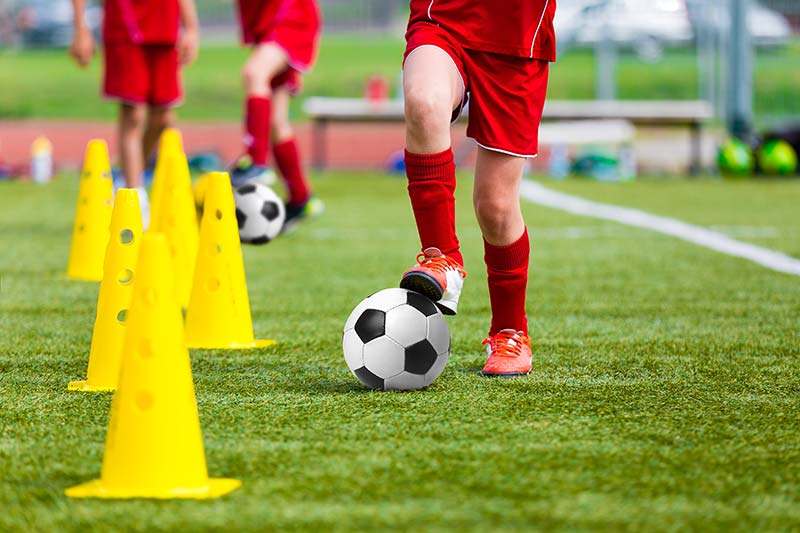
A series of exercises in which the sensimotor experience is as similar as possible to a sporting movement is called whole practice. The alternative is parts practice, where one or more parts of the movement is practiced, rather than all of it.
When it comes to complementary training, which is the training you do in order to support better actions in the field of sports, exercises is, regardless if whole or part, is highly simplified versions of sporting movement.
The more similar an exercise is in sensorimotor terms, the greater its potential help from it to improve at the field of sports. This is why whole practice is always preferable. Sometimes, however, it is difficult to ensure progression with whole practice.
When learning movement there must be room for self-organization of the motor patterns forming this movement. Without your body being able to self-organize it would not be able to react to the demands of the environment quickly enough (describe the amount of time it takes for the brain to send signal to the muscle), and regardless, such top-down control, would only ensure performance of very specific movements in a very set environments.
When the athletes skill in a movement is low, more top-down control is necessary, and therefore the cognitive demand is higher. Too much cognitive demand in a situation, or exercise, and we are more likely to fail.
Building “motor programs” is more a matter of eliminating movement patterns that work only sometimes, than learning a single solution that works every time. The variation (noise) in the movement is what helps to learn what could be left to peripheral self-organization and what will have to be done top-down.
If the athlete is to unskilled in an exercise the noise will be so great that he or she cannot learn much from the performance of it, and progress will halt because each performance of the exercises cannot be linked together, and learned from.
In such cases, regardless of the superiority of whole practice, complexity needs to be controlled and we need to break the challenge down into manageable challenges. So the aim for complementary training is to designing exercises that are “as whole as possible”.
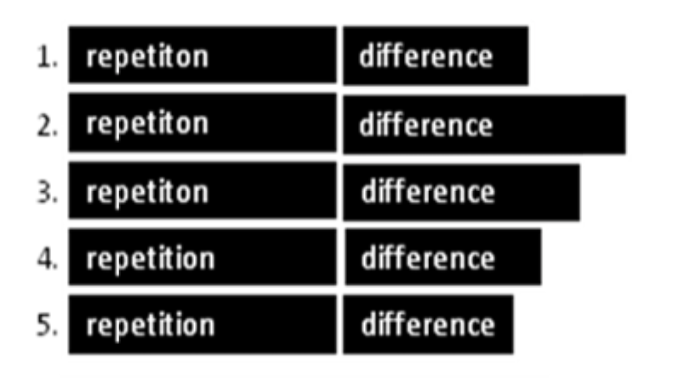
In a way, it’s not only the “signal” (successfully performed movement) that causes an increase of learned skill, but also the amount of “noise” (variability of performed movement).
“Open sports” (like basketball, football, mountain biking, etc) involve unpredictable, changing environments requiring constant adaptation, while “closed sports” (like gymnastics, weight lifting, swimming, CrossFit, etc) happen in stable, predictable settings with self-paced, consistent movements.
Strength training for open sports is so unlike the challenges on the field that expectations of a large effect from technical similarity are low. Better for these sports would be to focus more on structural change in the gym, like building muscles, tendons, and the capacity to tolerate force, rather than trying to add overload to sport-specific solutions.
But still, whether we challenge coordination or the ability to maintain stability against load (strength) there has to be sufficient challenge. Load, speed, time pressure, instability, or fatigue all create challenge, and in that sense they can all be thought of as intensity.
We can think of intensity as the amount of cognitive effort in demand. Time stress and load, as well as chaotic environments and mental pressure all play a role in how much cognitive effort is demanded during any given practice, and how well we can perform it. Seen this way, all training becomes skill training to some degree.
Whether the exercise is labeled “coordination” or “strength” the athlete is always negotiating constraints, managing errors, and organizing movement under pressure.
The distinction still matters because it changes what kind of error is informative, and where that error must be generated, but regardless of whether we train for strength or coordination, in open sports or closed sports, well-designed practice still always live in a corridor of not too hard, but never too easy.
What the scientific experiments show, across different paradigms, is not an optimal amount of error, but an optimal relationship to it. Learning improves when error persists without overwhelming the system, when it is clearly tied to the athlete’s own actions, and when it continues to demand reorganization rather than repetition. When those conditions are absent, practice may look good while learning is stalling.
Science can describe the boundaries perfectly well if fed enough data, but much of what happens in a exercise is not easy to measure, and the data will never be complete. And what is easily measured still means different things in different contexts.
This is where Borges becomes unexpectedly practical.
Borges’ poet does not learn anything by copying Cervantes letter by letter. Only when he writes the same text under different historical, linguistic, and intellectual constraints does the act become meaningful. The difference is not visible on the page, but it is decisive in the process that produced it. The same distinction applies to training.

Context is something that is hard to quantify into calculations. The coach who is present and attentive and has the experience to pick up on more things than even himself could tell what they are can build exercises that are “as whole as possible”.
A task is too easy not when it looks simple, but when it no longer forces the athlete to adapt. This is no easy judgment to make, but if we look carefully there are several signs of this.
One is premature stability. Technique settles quickly and remains unchanged across repetitions and sessions. Error diminishes early and does not return. In laboratory terms, the task has fallen below the learner’s challenge point. In practice, it means the athlete is executing a solution they already own. The movement may be clean, but it is informationally poor.
Another sign is the absence of exploration. Repetitions look the same not because the athlete is skilled, but because nothing in the task demands adjustment. Timing, rhythm, and sequencing repeat themselves without visible searching. The athlete can maintain conversation, attention drifts, and nothing in the environment threatens success. Here, the system is not stabilizing a coordination; it is merely repeating one.
A third indicator is error without consequence. Missed timing, poor force direction, or inefficient positions do not meaningfully affect the outcome. The movement “works” even when it should not. In such cases the nervous system has little reason to reorganize, because the signal carried by error is too weak. The practice is forgiving in a way competition rarely is.
Finally, there is emotional flatness. Learning tasks tend to produce small oscillations in attention and affect: mild frustration, renewed focus, occasional relief and sense of accomplishment. When practice is too easy, these disappear. The athlete is neither challenged nor threatened, and nothing is at stake. This is not a motivational issue, but an informational one.
None of these signs require measurement devices, they are judgments made in real time, by looking carefully and with intent at what changes and what does not.
Worth noting, even if a little of a side track, is that this requires the coach to have clear criteria for what they would expect when they give out an exercise. If those criteria are not already established before the exercise is performed, then how could possibly you make a judgment on too what degree the athlete fulfills the purpose of the movement?
There is a growing conversation about saving time by having AI generate training programs, with the coaches then to “personalize” them on the floor. But does this not risk exactly this requirement for clear, pre-established criteria? If the purpose is unclear to the coach then evaluating whether it was met becomes guesswork rather than coaching. Intention is not only required from the athlete, but from the coach as well.
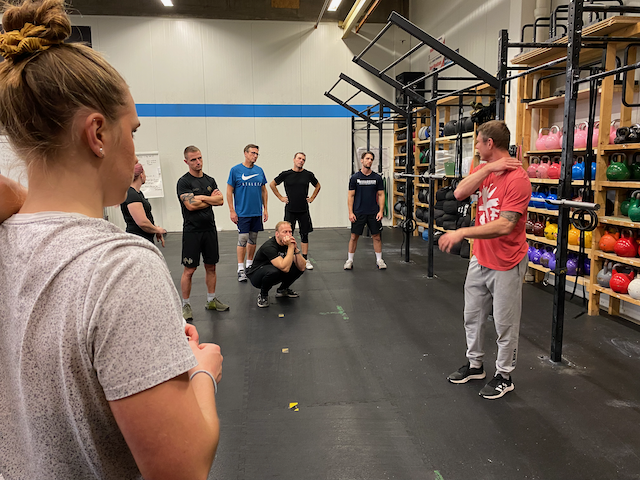
But, to get back on track:
When a task is identified as too easy, the solution is not to abandon it, but to change the conditions under which the same goal is pursued. The challenge can be increased by designing it as more whole practice, or the movement can remain intact while the challenge is altered, done with tighter time constraints, or performed with less visual information. Music can be turned up, familiar placement in the practice room can be changed, and fatigue, asymmetry, altered starting positions, or tighter success criteria can all raise the cognitive and coordinative demands without fragmenting the skill.
This preserves what the science insists on and what Borges illustrates: repetition only educates when it is not repetition in the literal sense. Learning emerges from encountering the same problem under conditions that are similar enough to recognize, yet different enough to require adjustment.
A coach does not need to chase either perfect movement nor complexity for its own sake. Their task is to keep practice from becoming a perfect copy of itself. That would be where learning stops.